By Noman Arshad
The BPS salary chart for 2026 shows Pakistan’s Revised Basic Pay Scales, effective 1 July 2026, which merged the 2022 and 2025 ad-hoc allowances into basic pay and added a new 7% relief allowance. BPS-1 now starts at Rs. 16,280, while BPS-22 reaches a maximum of Rs. 293,350.
Most salary charts online are already outdated the moment a budget changes the numbers, and 2026 brought exactly that kind of change. The government didn’t just adjust figures slightly — it restructured how basic pay is calculated by folding two years of allowances directly into the base. I’ve worked in HR for five years and regularly explain pay scale changes to people confused about why their advertised salary doesn’t match what shows up in their bank account. This guide walks through what actually changed, what the confirmed numbers are, and where the gaps in publicly available data honestly are.
What Is BPS and Why It Changed in 2026
BPS stands for Basic Pay Scale — Pakistan’s standardized pay grading system for federal and provincial government employees, running from BPS-1 (entry-level support staff) to BPS-22 (Federal Secretary and equivalent senior positions). Each grade has a minimum pay, a maximum pay, and a fixed annual increment amount.
In my experience helping people make sense of government pay structures, the timing of a change like this matters as much as the numbers themselves. Finance Minister Muhammad Aurangzeb outlined the underlying revision in the June 2026 budget speech, and on 21 July 2026, the Ministry of Finance issued an Office Memorandum introducing Revised Basic Pay Scales 2026 (RBPS-2026), replacing BPS-2022. This wasn’t a routine annual adjustment — it merged the Ad-hoc Relief Allowance-2022 (15%) and Ad-hoc Relief Allowance-2025 (10%) directly into basic pay, then added a new 7% Ad-hoc Relief Allowance-2026 on top of that revised base. The change is effective from 1 July 2026.
Q: Why did the government merge old allowances into basic pay instead of just adding a new allowance?
Merging the 2022 and 2025 ad-hoc allowances into basic pay simplifies salary calculations and raises the base figure used for annual increments, pension, and other pay-linked benefits going forward. Previously, ad-hoc allowances sat separately from basic pay and weren’t always counted toward pension calculations. By folding them in, the government effectively locks in those increases as a permanent part of basic salary rather than a temporary add-on, which also means future percentage-based allowances like HRA are calculated on a higher base.
BPS Salary Chart 2026 – Confirmed Grades
The table below shows minimum pay, annual increment, and maximum pay for grades officially confirmed in the sources reviewed for this article. Several grades between BPS-1 and BPS-22 were not individually detailed in available sources and are marked NOT AVAILABLE rather than estimated.
BPS Grade: BPS-1 — Minimum Pay (2026): Rs. 16,280 — Annual Increment: Rs. 520 — Maximum Pay: Rs. 31,880
BPS Grade: BPS-2 — Minimum Pay: NOT AVAILABLE — Annual Increment: NOT AVAILABLE — Maximum Pay: NOT AVAILABLE
BPS Grade: BPS-3 — Minimum Pay: NOT AVAILABLE — Annual Increment: NOT AVAILABLE — Maximum Pay: NOT AVAILABLE
BPS Grade: BPS-4 — Minimum Pay: NOT AVAILABLE — Annual Increment: NOT AVAILABLE — Maximum Pay: NOT AVAILABLE
BPS Grade: BPS-5 — Minimum Pay: Rs. 18,300 — Annual Increment: Rs. 910 — Maximum Pay: Rs. 45,600
BPS Grade: BPS-6 — Minimum Pay: NOT AVAILABLE — Annual Increment: NOT AVAILABLE — Maximum Pay: NOT AVAILABLE
BPS Grade: BPS-7 — Minimum Pay: NOT AVAILABLE — Annual Increment: NOT AVAILABLE — Maximum Pay: NOT AVAILABLE
BPS Grade: BPS-8 — Minimum Pay: NOT AVAILABLE — Annual Increment: NOT AVAILABLE — Maximum Pay: NOT AVAILABLE
BPS Grade: BPS-9 — Minimum Pay: NOT AVAILABLE — Annual Increment: NOT AVAILABLE — Maximum Pay: NOT AVAILABLE
BPS Grade: BPS-10 — Minimum Pay: Rs. 21,680 — Annual Increment: Rs. 1,430 — Maximum Pay: Rs. 64,580
BPS Grade: BPS-11 — Minimum Pay: NOT AVAILABLE — Annual Increment: NOT AVAILABLE — Maximum Pay: NOT AVAILABLE
BPS Grade: BPS-12 — Minimum Pay: NOT AVAILABLE — Annual Increment: NOT AVAILABLE — Maximum Pay: NOT AVAILABLE
BPS Grade: BPS-13 — Minimum Pay: NOT AVAILABLE — Annual Increment: NOT AVAILABLE — Maximum Pay: NOT AVAILABLE
BPS Grade: BPS-14 — Minimum Pay: NOT AVAILABLE — Annual Increment: NOT AVAILABLE — Maximum Pay: NOT AVAILABLE
BPS Grade: BPS-15 — Minimum Pay: Rs. 28,730 — Annual Increment: Rs. 2,380 — Maximum Pay: Rs. 100,130
BPS Grade: BPS-16 — Minimum Pay: Rs. 33,720 — Annual Increment: Rs. 2,720 — Maximum Pay: Rs. 115,320
BPS Grade: BPS-17 — Minimum Pay: Rs. 54,140 — Annual Increment: Rs. 4,110 — Maximum Pay: Rs. 136,340
BPS Grade: BPS-18 — Minimum Pay: Rs. 68,330 — Annual Increment: Rs. 5,120 — Maximum Pay: Rs. 170,730
BPS Grade: BPS-19 — Minimum Pay: Rs. 105,510 — Annual Increment: Rs. 5,450 — Maximum Pay: Rs. 214,510
BPS Grade: BPS-20 — Minimum Pay: Rs. 123,090 — Annual Increment: Rs. 8,040 — Maximum Pay: Rs. 235,650
BPS Grade: BPS-21 — Minimum Pay: Rs. 136,680 — Annual Increment: Rs. 8,920 — Maximum Pay: Rs. 261,560
BPS Grade: BPS-22 — Minimum Pay: Rs. 146,770 — Annual Increment: Rs. 10,470 — Maximum Pay: Rs. 293,350
Honest note on this table: I deliberately haven’t filled in the missing grades with estimated or interpolated numbers. The official Office Memorandum contains the complete BPS-1 to BPS-22 chart on pages 3–4, but the specific figures for grades 2, 3, 4, 6, 7, 8, 9, 11, 12, 13, and 14 weren’t available in the sources reviewed for this article. If you’re in one of these grades, the official Finance Division notification is the authoritative source for your exact figure.
Q: Why does this chart have “NOT AVAILABLE” for some BPS grades?
Several online sources publish a complete BPS-1 to BPS-22 table, but many of them likely interpolate or estimate missing figures rather than pulling every single grade from the official gazette. Rather than guess at numbers I couldn’t verify, I’ve marked those grades honestly. The confirmed figures above come directly from reporting on the official Ministry of Finance Office Memorandum, and the remaining grades should be checked against that same document or your department’s payroll office.
Old vs. New – What Changed for Key Grades
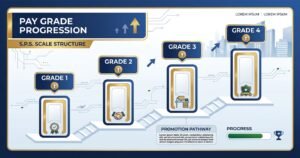
Comparing select grades between BPS-2022 and BPS-2026 shows how significant this revision actually is:
BPS Grade: BPS-1 — Old Minimum Pay (2022): Rs. 13,550 — New Minimum Pay (2026): Rs. 16,280 — Increase: Rs. 2,730
BPS Grade: BPS-16 — Old Minimum Pay (2022): Rs. 28,070 — New Minimum Pay (2026): Rs. 33,720 — Increase: Rs. 5,650
BPS Grade: BPS-17 — Old Minimum Pay (2022): Rs. 45,070 — New Minimum Pay (2026): Rs. 54,140 — Increase: Rs. 9,070
BPS Grade: BPS-22 — Old Minimum Pay (2022): Rs. 122,190 — New Minimum Pay (2026): Rs. 146,770 — Increase: Rs. 24,580
This table shows the increase grows in absolute rupee terms as the grade rises, though the underlying mechanism (merging two allowances plus adding 7%) applies proportionally across all grades.
Worked Example — Calculating Take-Home Pay for a BPS-17 Employee
Suppose an employee holds a BPS-17 position with the new minimum basic pay of Rs. 54,140 under RBPS-2026.
- Basic pay (2026): Rs. 54,140
- 7% Ad-hoc Relief Allowance 2026: Rs. 54,140 × 0.07 = Rs. 3,790
- House Rent Allowance (if posted in a major city, generally 45% of basic under standard allowance rules): Rs. 54,140 × 0.45 = Rs. 24,363
- Medical Allowance (a commonly cited fixed range, not confirmed for this specific grade): NOT AVAILABLE as an exact figure for BPS-17 specifically in sources reviewed
Adding the three confirmed components gives a clear partial picture: Rs. 54,140 (basic) + Rs. 3,790 (7% relief) + Rs. 24,363 (HRA) = Rs. 82,293 as a confirmed baseline gross figure — before medical, conveyance, and any departmental allowances are added on top. This Rs. 82,293 figure is already 52% higher than the Rs. 54,140 basic pay shown in a typical job advertisement, which is the core point most salary charts miss entirely.
Why this matters: A BPS-17 job advertisement showing “Rs. 54,140” doesn’t mean that’s the actual take-home salary — allowances substantially increase the real gross pay. This is exactly the kind of confusion I see people run into when comparing job ads without understanding how the full pay structure works.
Allowances That Sit on Top of Basic Pay
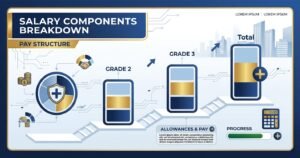
Beyond the basic pay figures in the chart, and something I always point out when people ask me about a specific grade, government employees typically receive:
- House Rent Allowance (HRA): Generally cited as 45% of basic pay in major cities (Category A/B), lower in other cities — exact current percentage under RBPS-2026 specifically NOT independently confirmed in sources reviewed for this article, though this rate is widely and consistently reported.
- Medical Allowance: A fixed monthly amount rather than a percentage, though the exact 2026 figure per grade was NOT AVAILABLE from a confirmed source.
- Conveyance Allowance: The 2026 budget speech mentioned a 50% increase to conveyance allowance, though the resulting rupee figures per grade were NOT AVAILABLE.
- Disparity Reduction Allowance: A 15% allowance for eligible employee categories was mentioned in the budget speech, though eligibility criteria details were NOT AVAILABLE.
Q: Is the 7% increase the only raise government employees got in 2026?
No, and this is a common misunderstanding. The 7% figure refers specifically to the new Ad-hoc Relief Allowance-2026, calculated on top of the already-revised basic pay. Because RBPS-2026 also merged the 2022 (15%) and 2025 (10%) allowances into basic pay first, the effective increase in take-home pay is larger than 7% alone would suggest, since the base itself grew before that 7% was applied. Media coverage focusing only on the “7%” headline misses this larger structural change.
Can Employees Choose to Stay on the Old Pay Scale?
Yes. Existing employees have the option to continue under BPS-2022 instead of switching to BPS-2026. This choice must be exercised in writing within 30 days of the Office Memorandum’s issuance. If an employee doesn’t submit this option within the deadline, they are automatically deemed to have opted into BPS-2026.
Q: What happens if a government employee misses the 30-day deadline to choose their pay scale?
If no written option is submitted within 30 days of the Office Memorandum’s issuance, the employee is automatically placed on BPS-2026 rather than remaining on the older BPS-2022 structure. Since BPS-2026 generally offers higher minimum pay across grades based on the confirmed figures, most employees would benefit from this default outcome, but the choice itself is still a formal administrative step that shouldn’t be ignored, particularly for employees whose personal pay arrangements might be affected differently.
Pay Fixation and Annual Increments
For employees already in service as of 30 June 2026, pay fixation under BPS-2026 happens on a point-to-point basis — meaning their existing stage within their grade carries over to the equivalent stage in the new scale, rather than resetting to the minimum. In practice, this means an employee who was at stage 5 of BPS-17 under the old scale moves directly to stage 5 of BPS-17 under the new scale, carrying their seniority-based position forward rather than restarting from the grade’s minimum. Annual increments continue to be granted on 1 December each year, under existing service rules.
Employees receiving personal pay above the maximum of their scale continue receiving it at the revised rate after this fixation process.
What This Means for Pension
The 7% Ad-hoc Relief Allowance-2026 is explicitly not counted toward pension or gratuity calculations, based on the terms outlined in the Office Memorandum. However, because the 2022 and 2025 allowances have been merged into basic pay itself, and pension is typically calculated on basic pay, this merger likely increases the basic-pay figure used in future pension calculations for employees retiring under BPS-2026. The exact pension formula impact per grade was NOT AVAILABLE in sources reviewed, so employees nearing retirement should confirm specifics with their department’s accounts office.
Other Pay Scale Systems in Pakistan (Beyond BPS)
RBPS-2026 as announced applies to Federal Government employees; provinces typically issue their own separate notifications adopting similar revisions on their own timeline, which may not be identical. BPS is the primary system for federal and most provincial civil servants, but it isn’t the only one:
- Provincial Pay Scales (PPS): Used by some provincial governments, generally mirroring federal BPS structure with province-specific allowances.
- Special Pay Scales (SPS): Used in strategic institutions such as the Atomic Energy Division, NESCOM, and SUPARCO.
- Armed forces (Army, Navy, PAF) and Police use their own separate rank-and-pay structures rather than the civilian BPS system directly, though equivalencies are sometimes drawn for comparison purposes.
Q: Does BPS apply to provincial government employees too?
Not directly. Most provinces run their own Provincial Pay Scale (PPS) systems, which generally mirror the federal BPS structure in terms of grade numbering but can differ in specific allowances and provincial top-ups. A PPS-17 employee in one province isn’t automatically earning the exact same total as a federal BPS-17 employee, even though the base grading logic is similar. Checking your specific province’s pay scale notification is necessary for exact figures.
The Short Version
The BPS salary chart 2026 reflects Pakistan’s Revised Basic Pay Scales, effective 1 July 2026, which merged the 2022 and 2025 ad-hoc allowances into basic pay and added a new 7% relief allowance on top. Confirmed figures show BPS-1 starting at Rs. 16,280 and BPS-22 reaching a maximum of Rs. 293,350, though several grades (2-4, 6-9, 11-14) weren’t individually confirmed in sources reviewed and are marked accordingly rather than estimated. Employees can choose to remain on BPS-2022 within a 30-day window, or default into BPS-2026 automatically. Actual take-home pay includes HRA, medical, and conveyance allowances on top of basic pay figures.
FAQs
What is the BPS salary chart for 2026 in Pakistan?
It’s the Revised Basic Pay Scales 2026 (RBPS-2026), effective 1 July 2026, showing minimum pay, annual increment, and maximum pay for each grade from BPS-1 to BPS-22, following the merger of previous ad-hoc allowances into basic pay.
What is the minimum salary of BPS-17 in Pakistan?
Under RBPS-2026, BPS-17 has a minimum basic pay of Rs. 54,140, up from Rs. 45,070 under the previous BPS-2022 scale.
What is the difference between BPS-2022 and BPS-2026?
BPS-2026 merges the 2022 (15%) and 2025 (10%) Ad-hoc Relief Allowances directly into basic pay and adds a new 7% Ad-hoc Relief Allowance-2026, resulting in higher minimum, increment, and maximum pay figures across grades.
How is house rent allowance calculated in BPS?
HRA is generally cited as 45% of basic pay for employees in major cities and a lower percentage elsewhere, though the exact confirmed rate specifically under RBPS-2026 wasn’t independently verified in sources reviewed for this article.
Can government employees choose to stay on the old pay scale?
Yes, employees can opt to remain on BPS-2022 by submitting a written option within 30 days of the Office Memorandum’s issuance. Without submitting this option, they default to BPS-2026.
Is BPS-16 salary really only the basic pay shown in job ads?
No, the basic pay figure in a job advertisement is only part of the total compensation. Allowances including HRA, medical, and conveyance are added on top, meaning actual gross pay is typically significantly higher than the advertised basic figure alone.
